
Problem 1 of 4 · warm-up
Two atoms both contain 11 protons. One has 12 neutrons and the other 13. Which classification fits?
Hint 1 · the clue
Proton counts match but neutron counts differ.
Hint 2 · the next move
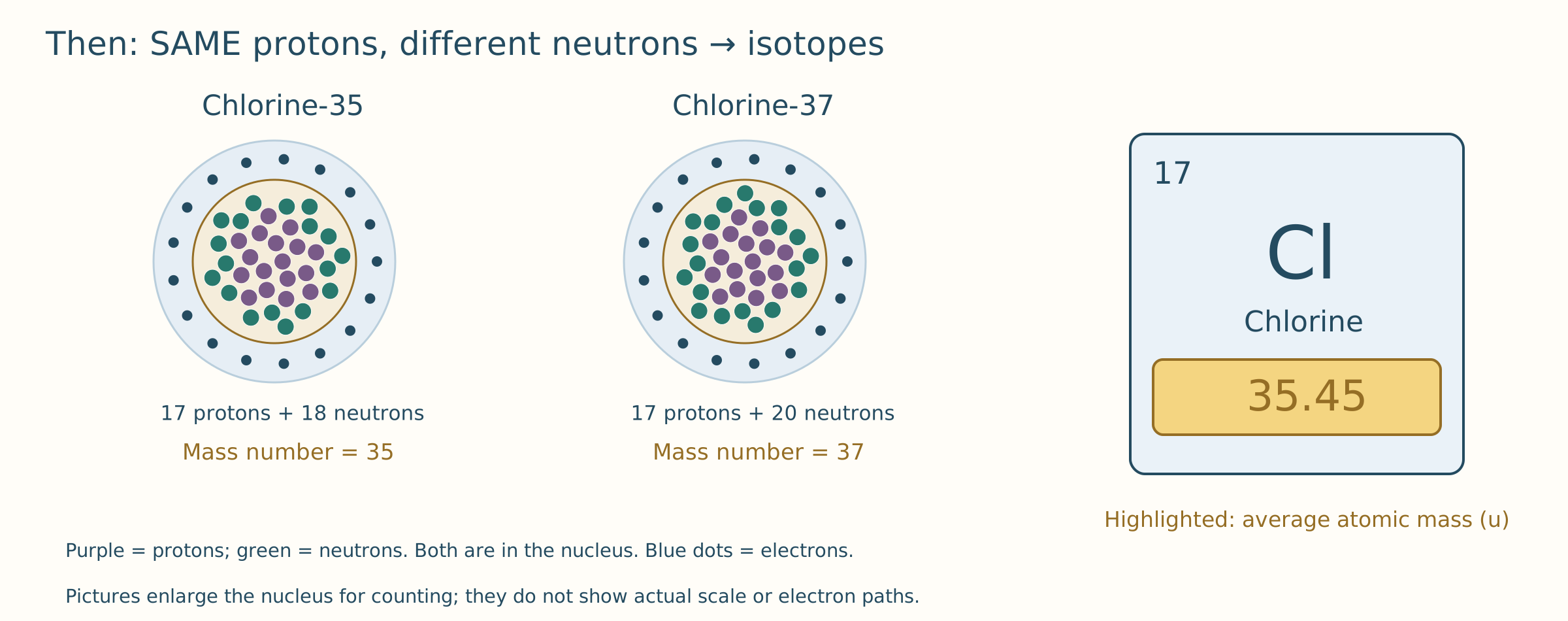
Same number of protons but different neutrons: that pattern defines isotopes of one element.
Your path:
- Same protons → same element
- Different neutrons → different mass numbers
- So they are isotopes
Answer
Answer: Different isotopes of one element
Full worked solution
What you know: both atoms have 11 protons; one has 12 neutrons and the other 13. What you want: how to classify them.
- Compare protons first. Protons identify the element. Both have 11, so both are the same element.
- Compare neutrons next. 12 and 13 differ, so their mass numbers differ: 11 + 12 = 23 and 11 + 13 = 24.
- Same protons with different neutrons is the definition of isotopes: Different isotopes of one element.
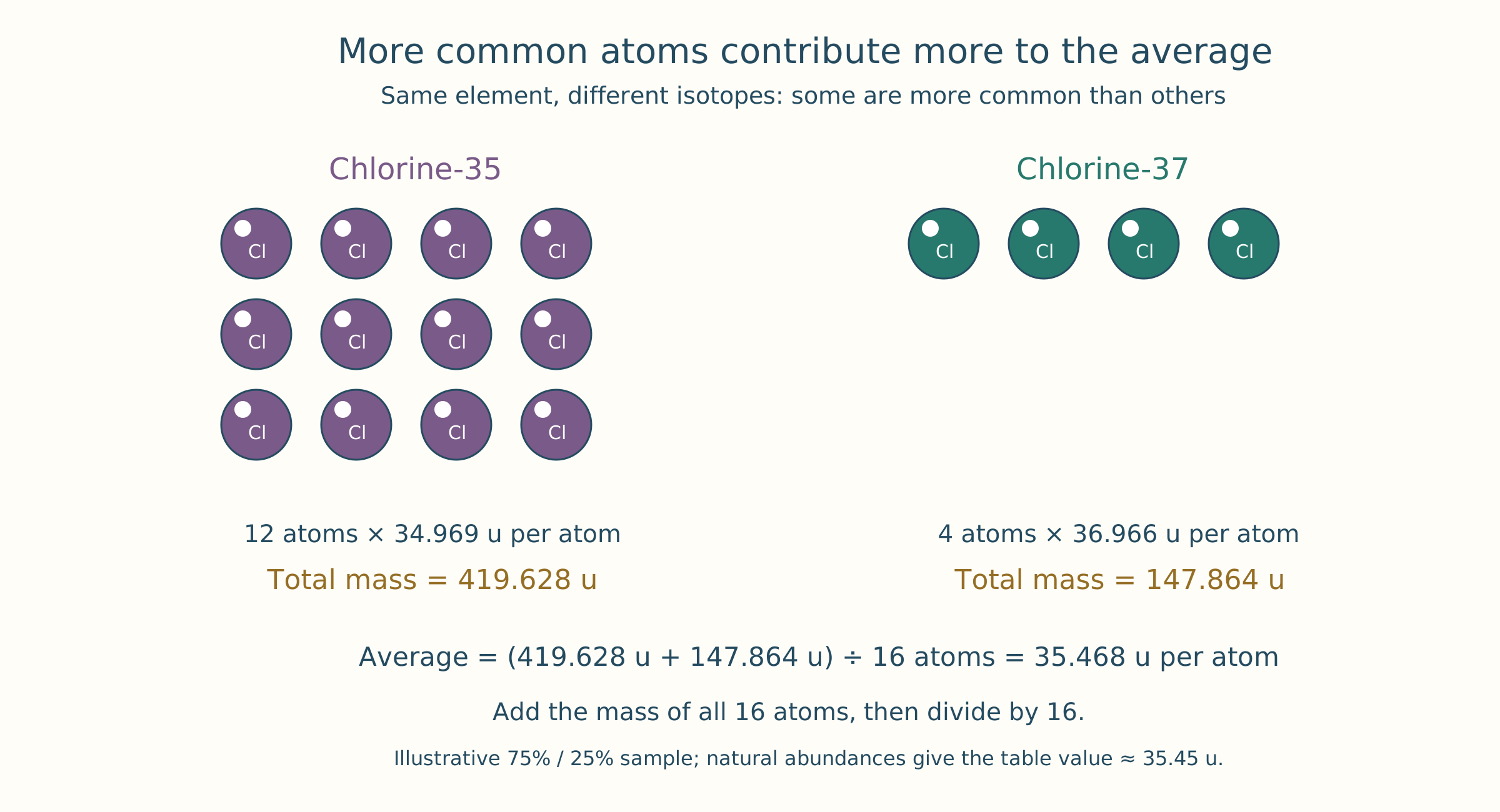
Why it matters: Isotopes behave almost the same chemically but have different masses, which is why the periodic table lists an average mass.
Watch out: Different neutron counts do not make different elements. Only a different proton count does.
Your route: Compare protons → Compare neutrons
11Na22.99On the periodic table: Sodium (Na) has atomic number 11, the whole number in its box, so both atoms are sodium.
Answer: Different isotopes of one element